
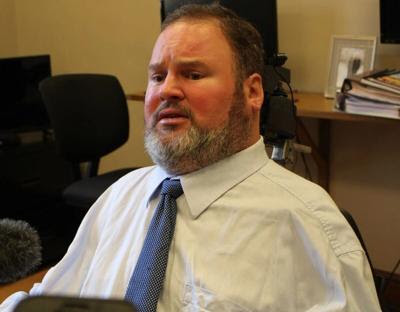
By Robert Falcon Ouellette
Originally published in the Winnipeg Sun, August 22, 2026. View the original article ↗
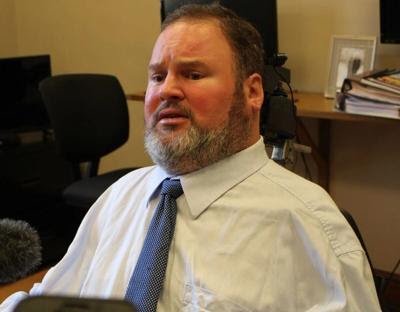
Steven Fletcher has spent much of his life refusing to accept the word “no.” In 1996, as a young man, he struck a moose while driving in Manitoba. The collision left him quadriplegic and changed his life in an instant. He would need a power wheelchair and assistance with things most of us do without thinking. The world around him, from buildings to transportation systems, suddenly became filled with barriers that many people never notice.
Steven could have disappeared from public life. Instead, he went into politics. He was elected to Parliament in 2004, eventually became a federal cabinet minister and, in one of those strange twists that history sometimes provides, served as minister of state for Transport.
I came to know Steven through politics, although we sat on opposite sides. He was a Conservative. I was a Liberal. We disagreed on plenty, but we also became friends. That is why I was not terribly surprised when Steven found himself in another fight, this time with WestJet.
Early last year, he was preparing to fly between Winnipeg and Toronto when WestJet refused to transport his customized power wheelchair because it exceeded the airline’s 300-pound weight limit. Think about that for a moment. A former federal transport minister, who has travelled for decades using power wheelchairs, was being told that the chair he depends upon to move through the world could not get on the airplane.
For most passengers, losing a suitcase is frustrating. A wheelchair is not a suitcase. For Steven, it is effectively an extension of his body. He was forced to use another chair and says the substitute caused pain and pressure sores requiring medical attention.
Steven could have complained to the airline and left it there, but that has never really been his style. He fought. He took the matter to the Canadian Transportation Agency, arguing that WestJet’s new 136-kilogram weight cap created an unfair barrier for people living with disabilities.
And he won an important victory.
The Agency concluded that WestJet was creating an undue barrier and ordered the airline to eliminate the restriction by June 30, 2027. In the meantime, WestJet must make alternative arrangements for affected passengers.
That decision is bigger than Steven Fletcher. A 14-year-old girl from Saskatoon was also prevented from travelling with her specialized wheelchair for a family vacation because it exceeded WestJet’s limit. Other travellers using heavy power wheelchairs have faced the same basic problem.
WestJet has argued that the restriction was connected to aircraft safety and limits on how much weight can be concentrated on the cargo floor. That is a legitimate concern. Nobody wants an airline ignoring aircraft safety, but safety cannot simply become the end of the conversation whenever accommodation becomes difficult.
The Transportation Agency pointed toward a remarkably practical solution: spreader plates. These devices distribute the wheelchair’s weight across a greater surface area of the cargo floor. Instead of simply saying the wheelchair is too heavy, the airline can find a way to safely carry it. That difference matters. One approach says you cannot travel. The other asks: how can we make this work?
There is a broader lesson here for governments, corporations and institutions. Rules often appear neutral when written on paper. Three hundred pounds seems like just one number and one policy. But rules do not affect everyone equally.
For an able-bodied traveller, a wheelchair weight limit may sound like an obscure airline regulation. For a Canadian who depends upon a power wheelchair, it can determine whether they can visit family, travel for work, attend a funeral or simply move freely around their own country.
Steven put it well when he said that being able to move around Canada is not a service upgrade or a courtesy. It is a condition of citizenship.
That should stick with us.
I have watched Steven Fletcher throughout his public life. He can be stubborn. Very stubborn. In politics, that quality can irritate opponents and occasionally friends. But sometimes society needs stubborn people: people willing to ask why a rule exists, challenge bureaucracies and keep pushing long after most people would have given up.
Steven began this fight because WestJet would not take his wheelchair, but the result will help people he may never meet. That is what public service is supposed to look like.
We belonged to different political parties and fought different political battles. Yet this is one where party affiliation means absolutely nothing. A Manitoban saw something wrong, decided not to accept it and fought until the Canadian system changed.
Once again, Steven Fletcher managed to make a little bit of history by fighting for the little guy.
—Robert-Falcon Ouellette is a former Liberal MP for Winnipeg Centre and a professor at the University of Ottawa.